

Selection GuideArticle
Sorted in reverse order by release time
-
2026.1113
Four methods for travertine-imitation walls: which looks most like real travertine
Conclusion first: "Travertine-look" is not one method, but four: natural travertine dry hanging, flexible travertine adhesive bonding, travertine-look coating, and travertine ceramic tile. The similarity, cost, construction period and applicable boundaries of the four methods are completely different. Before choosing, first think clearly whether you want "the feel of travertine" or "the texture of travertine". 1. First ask a more fundamental question: which kind of "look-alike" do you want? Travertine is liked because of three characteristics: the random distribution of pores, the natural transition at the edges of the pores, and the sense of mass and thickness of the stone itself. The three characteristics correspond to three levels of demand: looks like it from a distance (the texture is right), looks like it up close (the depth and edges of the pores are right), and feels like it when touched (the touch and thickness are right). The higher the level, the fewer the methods and the...

-
2026.1113
High-rise exterior wall tile detachment: how to choose fireproof and lightweight alternatives
Conclusion first: High-rise exterior wall renovation must simultaneously consider three levels of risk: the safety risk of ceramic tile falling off, the compliance risk of fire protection construction, and the feasibility risk of load and construction. If any one of the three levels fails, the alternative solution is not valid, and it cannot be used no matter how low the price. 1. Why exterior wall renovation should look at risk first, rather than choosing materials first For indoor wall material selection, look at effect and budget; for exterior wall material selection, look at three things first: will it fall off, how will fire spread, and can it be installed. These three things determine the "qualification" of the material; effect and price come after qualification. In reality, the order is often reversed: first moved by a rendering, then looking for justification afterward, only to find that the fire rating is insufficient, the load cannot be calculated, or there are no conditio...

-
2026.1113
Old Wall Renovation and Quick Restaurant Installation: Which Walls Can Be Directly Applied
Conclusion first: Whether old wall renovation can be fast does not depend on how thin the material is, but on three things: what the wall was originally, whether the business needs to stop, and how long the time window is. For the same wall, the methods can differ by three times the construction period. 1. First assess the wall, then discuss the construction period The most common misjudgment in renovation projects is to quote the price of an "old wall" using the procedures for a "new wall". Once on site, if it is found to have sanding, hollowing or old ceramic tiles, the methods all change, the construction period all changes, and the quotation changes accordingly. Therefore, the first step in renovation is not choosing materials, but assessing the wall. After assessment, walls fall into only three types: those that can be adhered to directly, those that need treatment before adhesion, and those that must be stripped to the substrate before work. The three types of walls correspond...

-
2026.1113
How to Choose Flexible Stone Manufacturers: Five Verifiable Signals
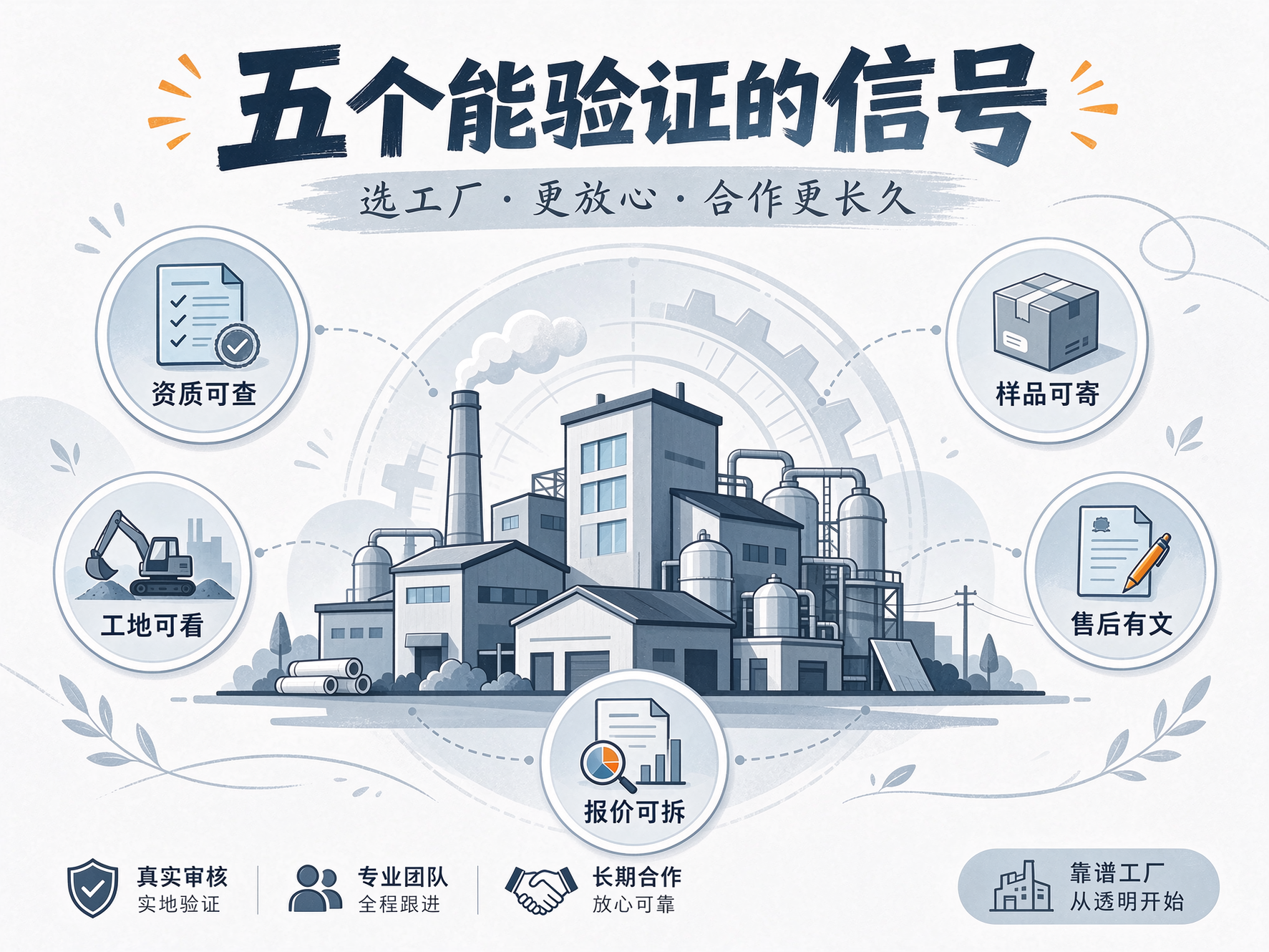
Conclusion first: When choosing a flexible stone manufacturer, do not listen to phrases like "strong strength, industry leader"; look at five verifiable signals: qualifications can be checked, samples can be sent, construction sites can be visited, after-sales service has documentation, and quotations can be broken down. Only when more than three of the five can be verified is it worth entering substantive negotiations; if none can be verified, no matter how low the price, you should not sign. 1. Where does the information asymmetry in this industry lie? Flexible stone (soft porcelain) is a product of formulation plus process. Its appearance can be replicated by molds, and its texture can be imitated by printing, but performance such as weather resistance, flexibility and stain resistance depends on the formulation system and the sintering/forming process, and cannot be judged from appearance. This means: for the same texture, there may be three companies selling it on the market, w...
-
2026.1113
How to inspect flexible stone: a checklist usable on site
Conclusion first: The acceptance inspection of flexible stone is not primarily about whether it "looks good", but whether five things can be checked item by item: substrate, bonding, joints, color difference, and finishing. Write the five things into a checklist and keep evidence for each item, and acceptance inspection is no longer each side saying its own thing, but a review that can be traced. 1. Why acceptance inspections always lead to arguments There are three most common conflicts in on-site acceptance: the owner says "it looks uneven", and the contractor says "measure it with a straightedge"; the owner says "this piece is hollow", and the contractor says "there was no adhesive at the spot you knocked on anyway"; the owner says "the color is wrong", and the contractor says "the lighting is different". The common cause of all three conflicts is that the criteria were not set before work began. If the criteria are not set, acceptance can only rely on feeling; and if it relies o...

-
2026.1113
Flexible stone construction: seven stages from substrate to finished product
Conclusion first: The construction quality of flexible stone does not depend on how fast the workers are, but on whether seven checkpoints are passed one by one: substrate, interface, layout lines, adhesive application, bonding, joint filling, and curing. If any checkpoint is skipped, problems will appear three months later in the form of hollowing, edge lifting or joint cracking. 1. Seven checkpoints, why they must be followed in order Thin-sheet finishes are a "bonding system", and their load-bearing logic is completely different from dry hanging: dry hanging uses a steel frame to hang the weight on the wall, while bonding uses the interface to adhere the sheet to the wall. In this chain, each link provides the conditions for the next—if the substrate is uneven, the interface is useless no matter how good it is; if the interface is not done, the adhesive bonds to loose dust; if the layout lines are inaccurate, the joints on the entire wall will be crooked. Therefore, the seven che...

-
2026.1113
Flexible Stone Wrapping Cylindrical Columns: Minimum Radius and Inside/Outside Corner Finishing
Conclusion first: Flexible stone can wrap cylindrical columns because it is a thin sheet that can bend (2–5mm, 3–7kg/㎡). Cylinders and curved walls can be wrapped in a single piece, leaving only one vertical seam. But "can wrap" does not mean "wrap at will"—the minimum bending radius must be confirmed by actual measurement according to the specific model and thickness, and the finishing details must be determined before work begins. If these two things are not done well, the wrapped column will definitely have wrinkles. 1. First determine: can this column be wrapped? Not all cylindrical columns are suitable for thin-sheet wrapping. Before work begins, go through five checks; if any one fails, the method must be changed: Diameter. For columns with too small a diameter, the curvature is too great, the bending stress on the sheet is concentrated, and wrinkling or springback is likely to occur. The specific lower limit should be measured according to the model, not estimated by experien...

-
2026.1113
Flexible stone not sticking firmly: the problem is mostly in the adhesive
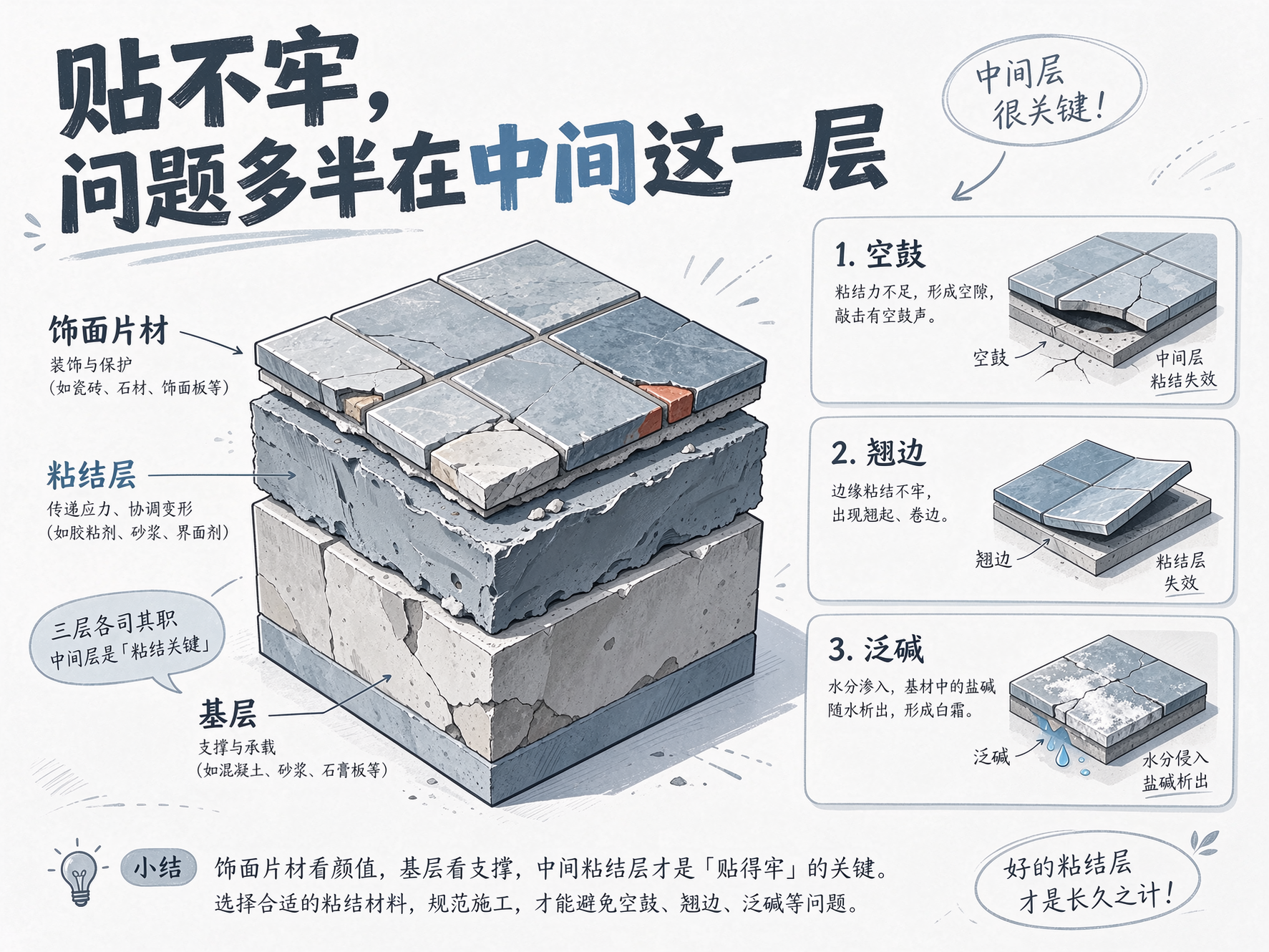
Conclusion first: When flexible stone fails to adhere, ninety percent of the problem is not in the sheet, but in the layer of adhesive in the middle and the substrate beneath it. The order of investigation should be: first check the substrate (is it flat, dry, and solid), then check the adhesive (is the selection correct, is the amount sufficient, has the open time passed), and only then suspect the material itself. 1. First understand the structure: three layers, the middle layer is the most critical After flexible stone is installed on the wall, it is actually a three-layer structure: the outermost is the 2–5mm finish sheet, the middle is the bonding layer, and the inner is the substrate wall (plaster, putty or substrate board). What the owner sees is the outermost layer, and when problems occur what is seen is the outermost layer, but what really determines whether it "sticks or not" is the middle layer. The division of roles among these three layers is clear: the sheet is respon...
-
2026.1113
How many years can flexible stone be used: service life depends on three conditions
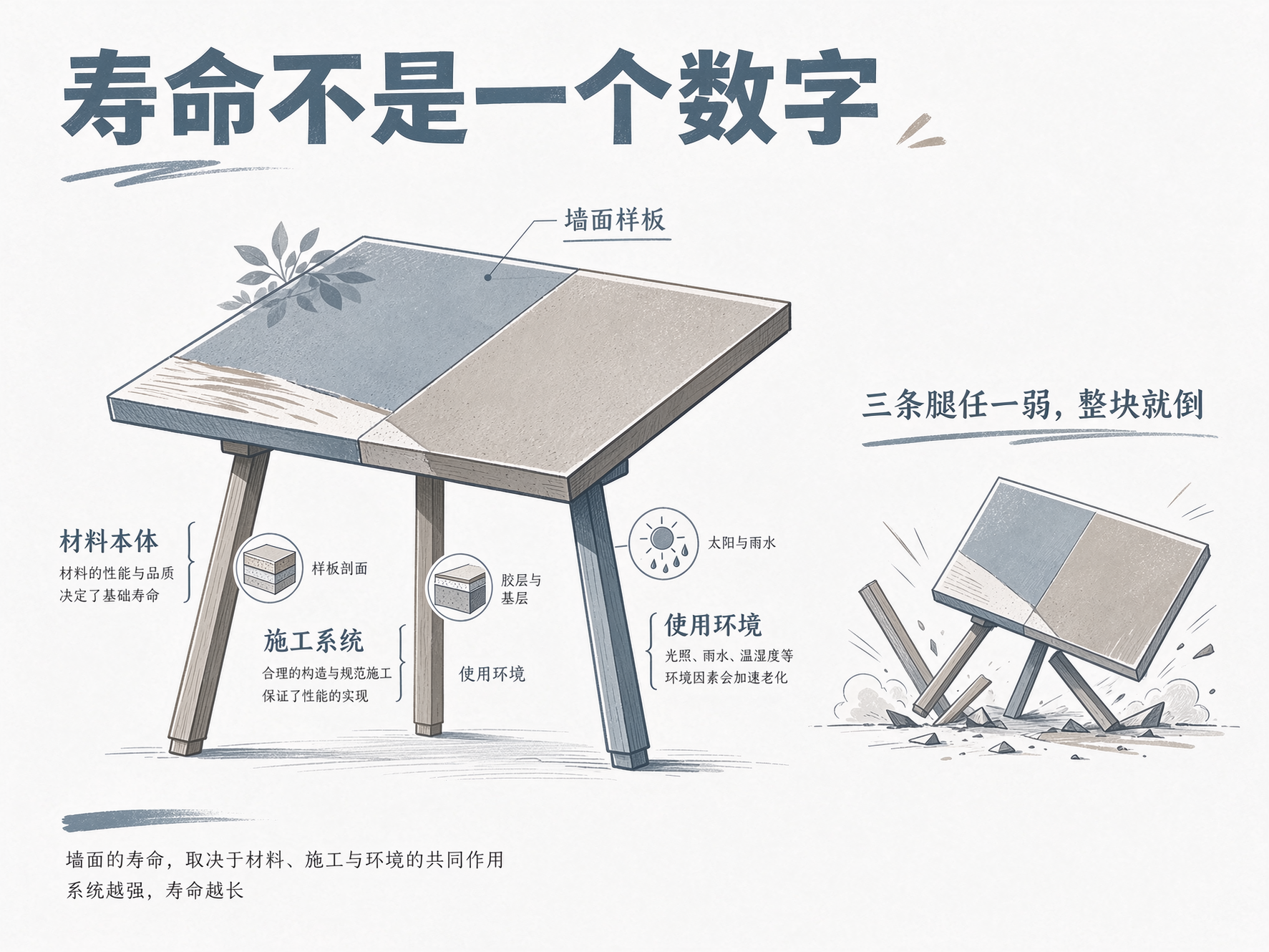
Conclusion first: The "service life" of flexible stone is not a fixed number of years, but the product of three conditions—the material itself, the bonding system, and the service environment. The material itself determines the upper limit, the system determines the lower limit, and the environment determines the rate of degradation. Therefore, to ask "how many years can it be used", the correct question is "on what substrate, with what adhesive, and in what environment can it remain stable for how many years". 1. Why the question "how many years" is itself problematic In an engineering context, "service life" has at least three bases, and mixing them together makes it impossible to explain clearly: Service life of the material itself. This refers to the aging resistance of the sheet itself under laboratory conditions, measured by accelerated aging tests; the conclusion is a set of data, not a number of years. System service life. This refers to the actual service capability of the...
-
2026.1113
How Much Does Flexible Stone Cost per Square Meter: Breaking Down the 2026 Quote into Six Items
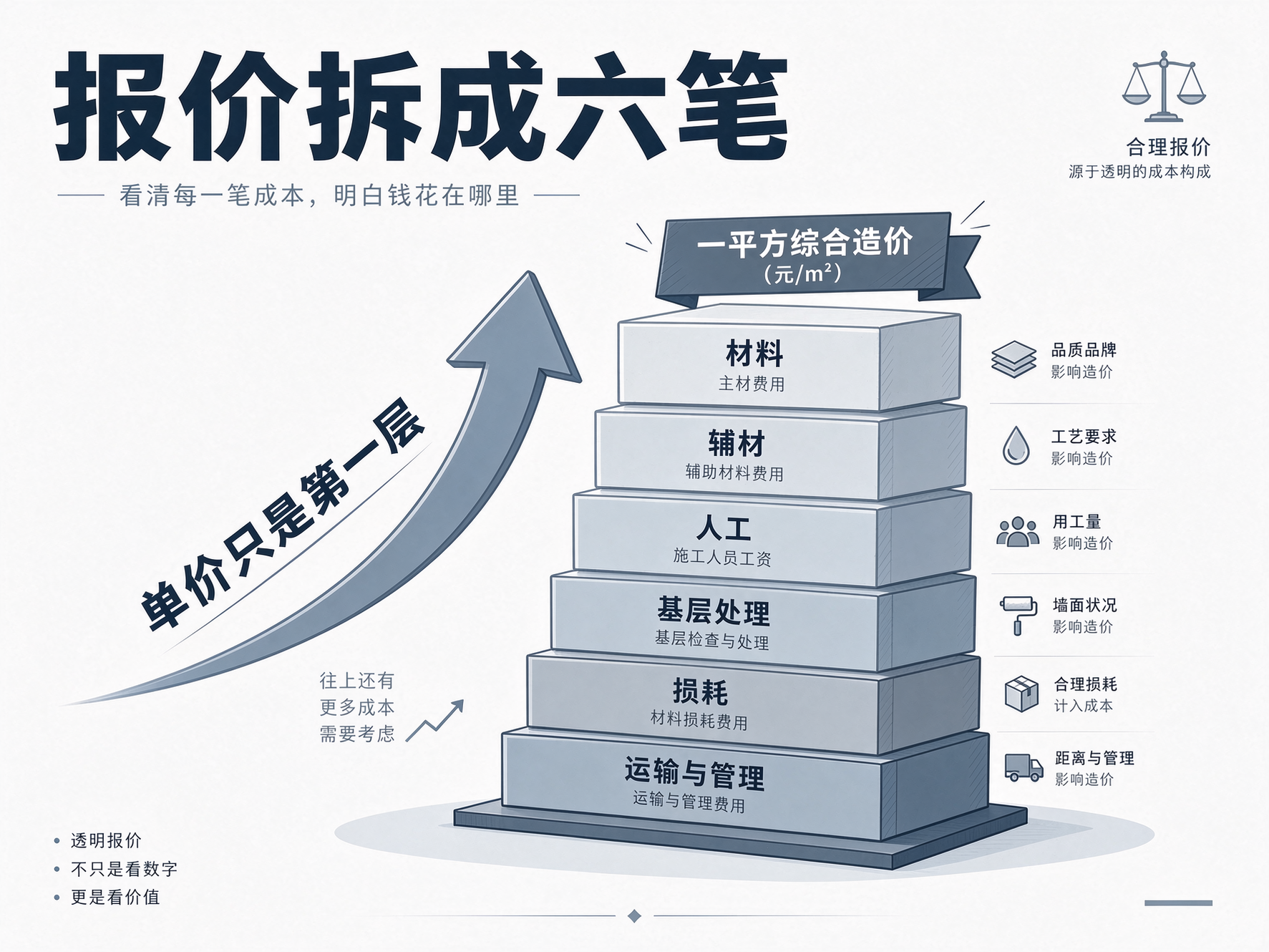
Conclusion first: "How much does flexible stone cost per square meter" cannot yield an accurate number, because the unit price is determined by six variables: style and thickness, area and layout, current condition of the substrate, supporting auxiliary materials, local labor, and transportation and delivery conditions. To know the price for your own project, the correct approach is to obtain a quotation that lists the six items separately, rather than a packaged total price. 1. Why this question cannot yield an accurate answer For the same flexible stone, the prices quoted by different people can differ by a factor of two. Usually it is not that someone is trying to cheat, but that at least three of these six variables are not aligned. First, let us clarify the variables: Style and thickness. Conventional texture styles such as travertine and slate and printed customized styles (inorganic ink printing series) are not the same process, so the prices naturally differ; thickness 2mm
Together 25 Article · No. 1 / 3 page
About FLAT and This Column
This column is published on the official website of Guangdong Fulaite Building Materials Co., Ltd., focusing on flexible stone and related architectural facing materials. Company information can be viewed.About UsThe inspected samples, testing institutions, report numbers, and actual test results can be viewedQualifications and inspection report。
The article is used for material selection and procurement reference. When it comes to specifications, thickness, weight, inspection level, or construction conditions, please check with the specific product number, report object, and test conditions. The order parameters are based on product information, confirmed samples, and written agreements.
Common problems in reading and material selection
Which column should be viewed first?
Understand industry trends to see materials and standards; see corporate news to understand the company's public activities; see common questions for material selection and construction questions; see foreign trade export specifications, packaging, and procurement communication.
Can the testing data in the article be used for all products?
Not directly applicable. It should be verified for specific products, tested samples, specifications, test conditions, and report scope. Different models or batches require separate confirmation.
How to consult specific projects?
Submit the use location, base condition, required area, intended texture, and delivery requirements through the contact page to communicate samples, materials, and quotes.



 WhatsApp

 Guangdong Public Network Security Preparation No. 44200002005257
