

A designer sends over a rendering and asks whether it can be done. This is one of the most common requests a flexible stone factory receives, and also one of the easiest to derail. Because the question "can it be done" contains at least four different questions: whether the pattern can be reproduced, to what level of precision it can be reproduced, how many years it can last outdoors after reproduction, and how much it costs per square meter.
Of these four questions, the first two are technical and the last two are decisions. Many projects get stuck not because something cannot be made, but because the two parties have different standards for "looking alike." This article explains the two technical paths clearly, and also explains their boundaries.
Two paths: molds for texture, printing for images
Customization of flexible stone essentially follows two technical paths.
The first is the mold path, that is, artistic soft porcelain. The relief, texture, and depth of the pattern are all pressed out by molds. One mold corresponds to one texture; molds can be made very finely, and the chisel marks of stone, the vessels of wood grain, and the warp and weft of fabric can all be reproduced. Its advantage is that the texture is realistic, has thickness, and does not fade over time; its disadvantage is that the pattern must "have texture"—flat images cannot be made—and mold making has a minimum order quantity.
The second item is the printing path, that is, inorganic ink printing. The pattern is printed directly onto the surface of the already formed panel using inorganic pigment ink, and then cured through post-treatment. Its advantage is that the pattern is almost unrestricted—photos, gradients, and illustrations can all be applied; its disadvantage is that the pattern is "flat," with no relief, and it places very high demands on resolution and color management.
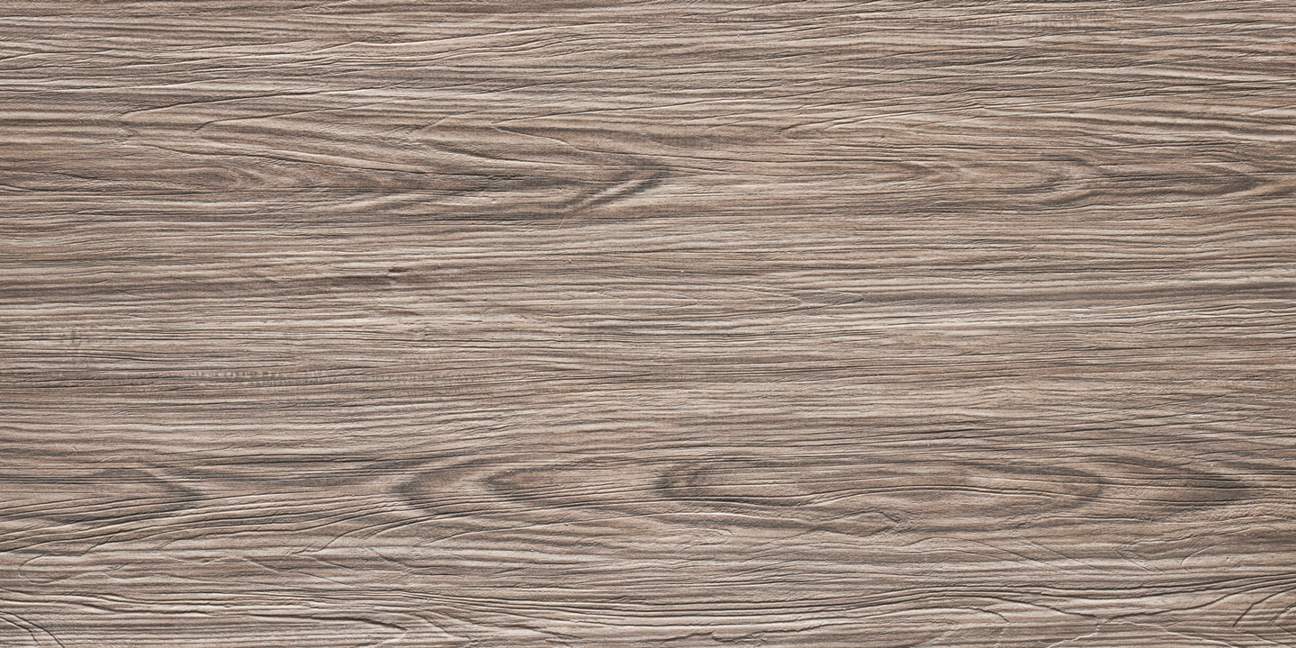
In Product Center,Artistic Soft Porcelain ClassificationIt follows the first approach, for exampleBlack mountain stone and white marble 1#、New Line Stone - Snowflake White;Inorganic ink printing seriesIt follows the second approach, such asCherry wood grain printed flexible stone、White oak color printed flexible stoneIt uses printing to apply a wood grain onto soft stone.
Resolution: first determine the viewing distance, then discuss precision
All the debate about "clarity" comes down to one sentence: how far away is the person looking.
At the normal viewing distance, the resolving power of the human eye is about five lines per millimeter. Converted to a wall surface, a distance of one meter requires about 150 to 200 dpi to avoid visible grain; at three meters, only 50 to 70 dpi is enough; beyond ten meters, even 20 dpi shows no problem. So before discussing precision, first answer this: where does the nearest person to this wall stand?
For indoor feature walls, people may stand within one meter, so the requirements are the highest; for main building facades, the closest distance is usually three to five meters (except for parts below the podium); for perimeter walls and distant facades, it is more than ten meters. The printing precision and cost corresponding to these three scenarios differ greatly. Some projects apply indoor standards to exterior walls, doubling the cost without necessarily achieving a visible improvement in effect.
One more thing that is often overlooked: the surface texture of the panel itself affects visual clarity. Patterns printed on a rough texture have their edges "eaten" by the texture and look lower in precision than they actually are. Therefore, fine patterns should use relatively flat substrates, while coarse-texture panels are suitable for color blocks and atmosphere, not for details.
Color: what is on the screen and what is on the wall are never the same thing
This is the stage most prone to conflict. Designers see RGB on their monitors; printing uses CMYK-based pigments; and the final appearance on an inorganic substrate must also go through curing and outdoor light exposure. Three stages, three shifts.
There are several things that can be controlled.First, provide the color code rather than a screenshot.If there is a brand color or standard color card, giving a Pantone number or RAL number is far more reliable than giving a JPG.Second, always make a sample.Moreover, samples are made on real substrates; printed proofs on coated paper cannot be used as samples.Third, samples should be viewed under natural light at the project site.The factory lights are cool white, while the site may have warm yellow sunset light; the same color can look like two different characters.
One more point to accept:Large-area dark colors and solid colors are the hardest to get right.Because the human eye is extremely sensitive to color differences on large areas of uniform color, even a slight unevenness can be seen. If the design calls for a full surface of dark gray or a full surface of brick red, it is recommended to switch to products in the same color family using the mold route, or to accept the slight light-and-dark variation of a "handcrafted feel."
Which patterns are destined to be impossible to produce
Let's discuss a few types that are often attempted but are actually difficult to implement.
Extremely fine lines.For example, hairline-level metal lines and fine grids. Printed ink dots have a physical size; lines that are too fine will break or blur. Such patterns are better made on other materials using metal etching or screen printing.
Continuous fine gradients.A smooth transition from light to dark is prone to "color banding" in printing, especially in the midtones. The mold path cannot achieve gradients at all; the printing path can, but a certain degree of banding risk must be accepted. Before proceeding, have the factory produce gradient test strips.
Photorealistic people and animals.It can be done, but unless the viewing distance is far enough, the texture of skin and hair will be hard to get right. And once such a pattern goes out of style, the wall becomes a burden.
Large-area high-saturation solid colors.See the previous section. For large-area color blocks with high saturation, color differences will be amplified, and the problem of uneven fading outdoors will be more obvious.
Joints: the most likely place to fail after the pattern spans across panels
No matter how good a single sample looks, if it shows flaws as soon as it is installed on the wall, eight times out of ten the joints were not handled properly.
When a pattern spans multiple panels, there are two options:Vein matchingOrControl jointPattern matching means aligning the pattern at the seams, like hanging wallpaper; broken seams mean letting the pattern break naturally at the seam, using the seam itself as part of the composition. The former places extremely high demands on cutting and installation precision: if a single panel is off by one or two millimeters, the pattern is misaligned and looks from a distance like a crack in the wall. The latter has higher tolerance but requires that the pattern itself be "divisible into blocks," such as wood grain, stone grain, or abstract color blocks.
My suggestion is: realistic patterns, and patterns with figures or text, must have their patterns matched, and must be pre-arranged at the factory, numbered, and shipped in sequence; for texture patterns, cut the joints decisively—it saves effort and looks good.

Sampling: five steps, none can be skipped
In custom projects, the stage most prone to problems is not production but sampling. Skipping any step will cost you double later.
Step one, requirement confirmation.Write the pattern file, dimensions, application area, viewing distance, and desired effect onto one page. This page must be signed by both parties, and all subsequent disputes shall refer back to this page.
Step two, file processing.The files provided by the design side are usually 72dpi JPGs or screenshots of renderings, and the factory must first enlarge, retouch, and color-separate the images. This step produces the first deformation, so the "processed image" must be signed back for confirmation.
Step three, small-sample trial printing.Print a small patch on the actual substrate to check the color and precision. This step is usually free or costs very little, but many projects skip it to save time and go straight to the formal sample panel, resulting in greater waste.
Step four, proportional sample board.Make one or two pieces according to the actual panel size and view them under natural light at the project site. The focus is on the joints and the overall impression from a distance, not on staring at local details.
Step five, sealed sample.Each party retains one signed sealed sample, marked with date, batch, and color code. Future acceptance, replenishment, and after-sales service will all be based on this sealed sample.
If the whole process goes smoothly, it takes two to three weeks; for complex patterns or cases requiring repeated color adjustment, a month is also normal. Allow for this period when scheduling the project—don't wait until the exterior scaffolding is up before remembering to finalize the samples.
Numbering and alignment during construction
For projects requiring continuous patterns, pre-layout numbering must be done before leaving the factory. A label is affixed to the back of each panel indicating "which wall, which row, which column", and packaging is stacked in installation order. On site, install according to the numbers; if you do not install according to the numbers, the pattern will definitely be wrong.
One more thing to do on site:First lay out the pieces on the ground as a preliminary arrangementLay the panels for an entire wall on the floor in order, step back and look, confirm that the pattern connections are correct, and then install them on the wall. This step does not take much time but can avoid major rework. I have seen a project that did not do a pre-layout; only when it reached the third layer did it discover that the entire pattern was upside down, and everything had to be chiseled off and redone.
One more reminder: once flexible stone is installed, its position is basically not adjustable; after compaction, if you want to move it again, the panel is ruined. Therefore, before installation, the chalk lines must be accurate, and the position of the first panel must be checked repeatedly, as it is the benchmark for the entire wall.
How many years can it be used outdoors?
This is the question the client cares about most and is also the hardest to answer. The honest answer is: it depends on the substrate formulation, ink system, post-treatment process, and local climate; there is no uniform service life.
The basis that can be checked is in the test reportResistance to artificial weatheringFor projects, it is usually measured in hours, and after testing, the color difference and degree of powdering are checked. When reading a report, pay attention to three points: whether the sample is an exterior wall model, how long the test duration is, and what the conclusion is. Some reports only test for 500 hours, which is indoor-grade data and cannot be used to promise exterior wall service life.
In areas of the south with strong ultraviolet radiation, it is advisable to pay extra attention to light fastness; in coastal areas, pay attention to salt spray; in industrial areas, pay attention to acid rain and dust adhesion. Standard reports cannot fully cover all of these; the service environment needs to be clearly communicated to the supplier at the scheme stage.
How are costs roughly calculated
The price of custom products usually consists of three parts: mold or plate-making fees, the unit price of the panels, and sampling and loss.
The mold fee is a one-time investment and applies only to the mold route; molds with complex patterns and large sizes are more expensive. The printing route has no mold fee, but there is labor for plate making and color matching. The unit price of panels is calculated per square meter; printing types are usually somewhat more expensive than conventional patterns of the same specification, because there are additional printing and curing processes. A proofing fee is generally charged, but if an order is subsequently placed, most factories can deduct it.
One more hidden cost:Layout and numberingFor projects where patterns need pattern matching, the factory must pre-arrange, number, and package in sequence; this work is considerable and easily omitted in quotations. The project party should state "pre-arrangement and numbering required" at the inquiry stage so that the other party includes this part in the calculation.
Several questions actually asked
Can a single photo be used directly for an entire wall?
Technically it is possible, but the effect may not be good. The depth of field and light and shadow of a photo are designed for small-size viewing. When enlarged to the height of several buildings, perspective and clarity will both have problems. If you really want to do it, it is recommended to first have someone "flatten" the photo, remove overly strong light and shadow, and simplify the details.
Will the printed pattern rub off?
Under normal processes, it will not. After high-temperature or chemical curing, the inorganic ink bonds with the substrate; it is not a coating floating on the surface. For daily cleaning, use a neutral cleaner with a soft brush; do not use strong acids, strong alkalis or steel wool.
Can small batches be customized?
The minimum order quantity for the printing process is relatively flexible, but there is also an efficiency threshold; the mold process is limited by tooling costs, so the per-square-meter cost will be very high at small volumes. The specific minimum order quantity should be clarified during the selection stage, so you don't discover after the drawings are done that the volume is insufficient.
One final reminder about lead time: for custom projects, lead time is not counted from the order date but from "sample-sealing confirmation." The time spent on negotiation, sampling, and sample revision is often longer than production itself. Allowing enough time matters more than pressing for a lower price.
To see existing customization cases, you can scroll toInorganic ink printing seriesandArtistic soft porcelainproduct page; applications in actual projects,Engineering casesThere is a reference. All customization is ultimately subject to the confirmed and sealed sample; verbal descriptions do not count.



 WhatsApp

 Guangdong Public Network Security Preparation No. 44200002005257
