

First, the conclusion: MOQ is not an isolated number
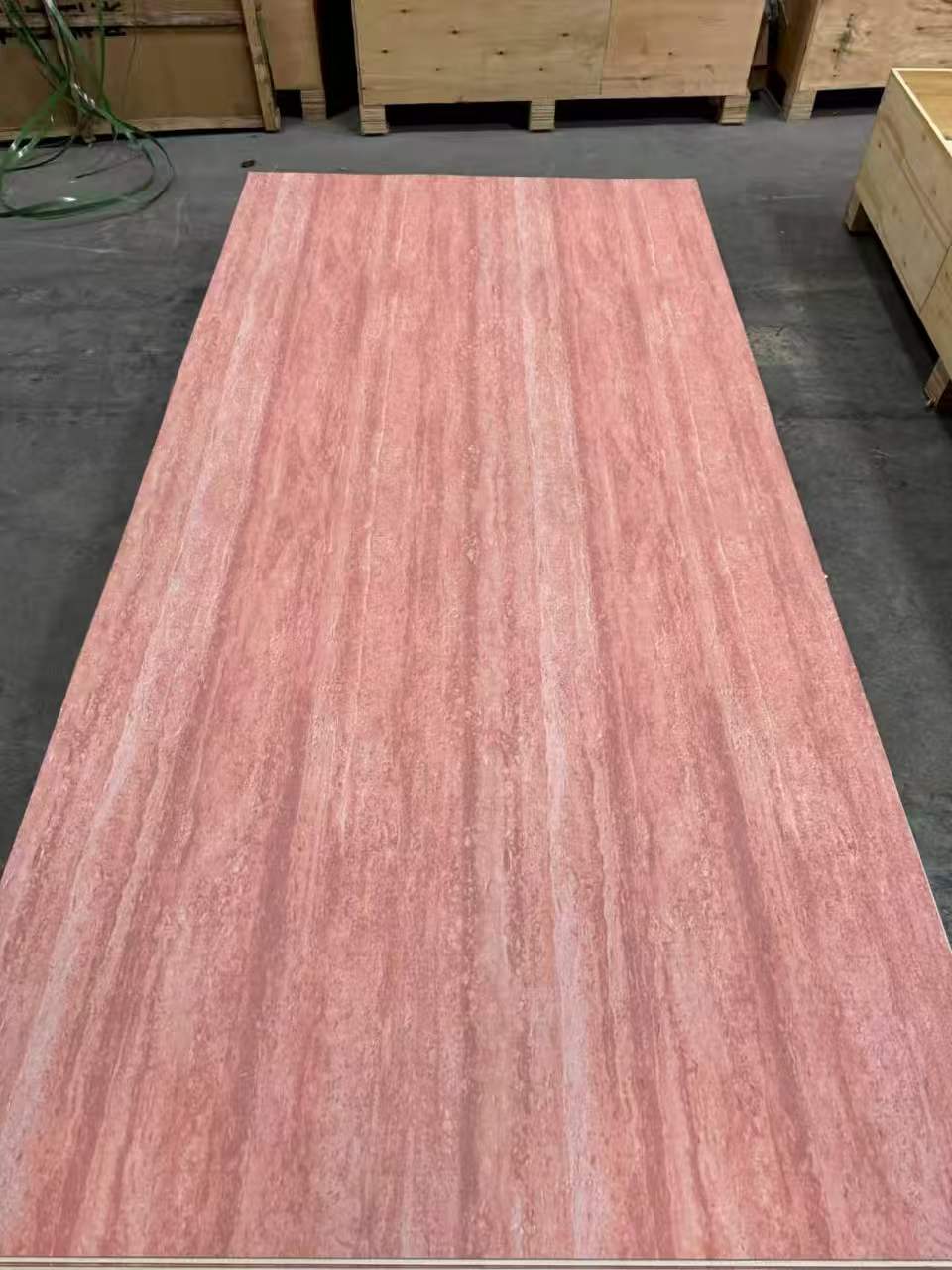
When a building materials foreign trade company develops flexible stone for the first time, one of its main concerns is the minimum order quantity. Truly effective negotiation is not about asking the factory to unconditionally reduce the quantity, but about breaking down the product, color, packaging, production and subsequent order plans so that the supplier knows this is an executable market testing plan. Flexible stone is also called soft porcelain or flexible facing tile, and includes textures such as travertine, slate, rammed earth panel and split brick, cloth-grain stone. Different series, colors and specifications have different production conditions, so a single quantity cannot represent all products.
As of the time this article was produced, the specific minimum order conditions for each FLAT series should still be subject to formal inquiry and written confirmation. Trading companies should not put unconfirmed verbal quantities directly into customer quotations. A reasonable goal is to find a balance between financial risk, factory efficiency and market validation.
Why do suppliers need to set a minimum order quantity
Producing a batch of products not only consumes materials but also involves color and texture confirmation, equipment changeover, staffing arrangements, sorting, packaging and quality records. When the quantity per style is too small, these fixed tasks are spread over very few finished products, and both unit cost and the probability of errors may rise. Custom colors, special specifications and branded packaging may also each have separate thresholds.
Therefore, trading companies must first clarify "what the MOQ corresponds to": a single product code, a single color, one packaging unit, the entire order, or a certain production batch. Only when the definition is consistent can quantities and quotations between suppliers be comparable.
Main items affecting minimum order conditions
- Product series, colors, specifications and whether they are standard items;
- Whether mixed colors within the same series or mixed styles across series are allowed;
- Whether custom labels, cartons, sample books, and barcodes are needed;
- The difference between stock items, scheduled production orders and special custom orders;
- The pricing system for sample orders, market trial orders and regular replenishment orders;
- Packaging integrity, pallet method and shipping requirements.
What should be verified in a small-batch trial order?
The value of a trial order is not buying the most styles for the lowest amount, but using a limited budget to verify customer interest, supplier response, and delivery quality. It is recommended to limit the verification objectives to three categories: whether the product suits the target channel, whether the supply chain is stable, and whether the sales team can form effective quotations and sample displays. If too many textures are purchased at once, each style has too few samples, making it harder to judge real demand.
Before a trial order, select a small number of core styles, differentiated styles and alternative styles. Core styles cover broader project needs, differentiated styles demonstrate the value of flexible stone compared with common tiles or wall panels, and alternative styles are used to observe regional preferences. For each product number, record samples, purchase quantity, number of inquiries, customer feedback and the next decision.
Four workable methods for negotiating minimum order quantities
Use mixed models from the same series
If production and packaging allow, ask whether different colors in the same series can be combined to reach the total quantity. Mixed models can expand the display area for the first batch, but you must confirm the minimum quantity for each model, the markings inside the boxes, and the distribution method; do not confirm only the total area.
Keep sample sheets separate from commercial orders
Samples are used for customer confirmation and are not equivalent to profitable mass production. Trading companies can accept reasonable sample and courier costs while requiring clear sample numbers, specifications and correspondence to mass production, so that a low-priced sample does not lead to an order that cannot be fulfilled later.
Establish quantity tiers
At the same time, ask about the unit price, packaging, and delivery time for the three quantity ranges: trial orders, regular orders, and project orders. A tiered plan lets customers see the improvement after volume increases and also helps trading companies calculate repeat-purchase profit in advance.
Trade flexibility for repeat-order plans
Providing suppliers with key markets, expected testing cycles, and replenishment logic is more credible than simply promising "large orders." You can discuss arrangements such as a small first order, replenishment orders after reaching a sales volume, and fixed procurement of regularly stocked items, but all discounts and conditions must be written into a confirmation document.
Information that must be clarified in one go when requesting a quote
- How the minimum order quantity is calculated for a single style, a single color, a single specification and a full order respectively;
- Which existing styles can be mixed, and does mixing affect unit price and delivery time;
- Whether custom colors, sizes, packaging and labels have separate thresholds;
- Whether sample fees can be handled in subsequent orders, and the applicable conditions;
- The prices, packaging, production cycles and payment requirements corresponding to different quantity ranges;
- Whether there are additional costs or alternative solutions when the order quantity is below the minimum order quantity;
- Can supplementary orders use the samples from the first batch, and how should batch differences be confirmed;
- How order changes, cancellations, and surplus materials are handled.
Making the questions into a unified inquiry form can reduce repeated communication between sales staff and the factory, and also makes it easier to compare the true costs of different solutions.
Do not look only at the purchase amount; also calculate the total testing cost.
The trial order budget should include products, packaging, domestic transportation, export handling, international logistics, samples, inspection, damage reserve, promotional materials, and sales follow-up. When the order quantity is very low, the proportion of logistics and handling costs may rise; when there are too many styles, sample management and sorting costs also increase. Therefore, "lowest MOQ" does not necessarily mean the lowest risk.
It is recommended to use "how much it costs to obtain one valid market conclusion" as the accounting standard. If one batch of goods can complete multiple customer demonstrations, collect quotation feedback and verify the replenishment process, its testing value may be higher than buying only scattered samples.
Supplier selection cannot be replaced by low minimum order quantity
Willingness to accept small orders is only one of the conditions for cooperation. Trading companies must also verify sample consistency, batch records, quality inspection, packaging, communication and delivery. A low threshold but frequent price changes, inability to provide clear product numbers, or inconsistency between bulk goods and samples will make market testing meaningless.
The safer approach is to first obtain written product documentation and samples, then confirm trial-order conditions, complete sample sealing before production, and inspect appearance, quantity, labels, and packaging before shipment. Keep complete records for the first collaboration to provide a basis for the second order.
Five actions to improve trial order profit
- Reduce undifferentiated styles in the first batch and concentrate the budget on products with clear customer uses;
- Unify specifications and packaging to reduce the complexity of style changes, sorting, and warehousing;
- Design combinations of basic and feature styles, not just selling individual pieces of material;
- Collect customer intentions in advance and use real feedback to decide on restocking;
- Link sample numbers, quotations, and order data to eliminate low-inquiry styles.
Common Questions
Does flexible stone have a uniform minimum order quantity?
There is no unified figure applicable to all manufacturers and series. It should be confirmed in writing with the supplier according to product number, color, specification, packaging, and customization requirements.
How many styles should be selected for a first purchase?
Based on the number of customers and the testing budget, a small number of core items with clear positioning, differentiated items and alternative items should be selected, avoiding the purchase of large quantities of similar textures merely for variety.
Can mixed styles definitely lower the threshold?
Not necessarily. Mixed styles depend on production, packaging and inventory conditions and may also affect price and lead time; the minimum quantity for each style must be confirmed.
Why is the unit price higher for small-batch orders?
Fixed work such as sampling, style changes, sorting, packaging, and management must be shared across fewer products, so unit costs may rise.
How can we avoid the second batch not matching the sample?
Keep signed sealed samples, product numbers, color records and first-batch retained samples, and confirm batch differences and acceptance criteria before reordering.
Is it more important to lower the minimum order quantity or to lower the unit price?
During the new product testing stage, total risk should be controlled more carefully. Total investment, sellable quantity, quality stability and replenishment capability should be compared comprehensively, rather than looking at only one condition.
Conclusion: exchange a verifiable trial-order plan for supply chain flexibility
The core of negotiating the minimum order quantity for flexible stone is to let the factory understand the product mix, market testing and repurchase path, while letting the trading company understand each cost and responsibility. When requesting a quotation from FLAT Fulaite, it is recommended to submit product images or numbers, target specifications, quantity per item, packaging, destination market and expected timeline, so as to obtain an executable minimum order and quotation plan.



 WhatsApp

 Guangdong Public Network Security Preparation No. 44200002005257
