

Why can't prices be compared directly when both are called flexible stone?
When a building materials foreign trade company asks about the price of flexible stone, it often receives quotes with obvious differences. The reason is not necessarily who is more expensive or who is cheaper, but may be differences in product series, specifications, textures, quantities, packaging and service scope. Without unified conditions, comparing only the unit price per square meter can easily lead to choosing a seemingly cheap option that actually has a higher total cost.
Flexible stone, also called soft porcelain or flexible facing tile, includes different directions such as travertine, slate, rammed earth panels, split bricks, cloth-texture stone, and rough granite textures. The production, surface effect, specifications, and packaging of each type of product may differ. Foreign trade quotations must also add transportation, port charges, inspection, samples, loss, commission, and payment terms, so the factory price is only the starting point of cost.
This article does not provide fixed prices divorced from specifications and quantities; instead, it helps trading companies understand the price structure and establish a reusable cost table and quotation method.
First factor: product series and surface effect
Different texture series may use different production methods, surface treatments and quality control requirements. The costs of basic textures, complex stone-imitation effects, special colors or custom patterns may differ. Even when names are similar, surface layers, number of colors and production batches also affect the quotation.
When requesting quotations, trading companies should confirm using product numbers, photos and samples together, avoiding writing only "travertine" or "slate." The same name may cover multiple colors and effects. Supplier quotations should correspond to specific products, and customer quotations should also retain the number.
The second factor: specifications, thickness and order requirements
Product dimensions affect material utilization, production efficiency, packaging and transportation. Special dimensions, small-batch cutting or stricter dimensional requirements may increase waste and operating costs. Thickness, backside condition, edge treatment, etc. may also affect the price, but specific parameters must be based on the supplier's written documentation and samples.
A foreign trade company cannot use the price of one specification to estimate another specification. The inquiry sheet should list product number, length, width, thickness requirements, quantity unit, permitted tolerances, and application requirements. The more complete the information, the fewer subsequent price adjustments and disputes there will be.
The third factor: order quantity and production organization
Small-batch orders must share the costs of sampling, machine setup, changeovers, packaging, and management, so the unit price usually differs from that of stable volume orders. Multiple styles in small quantities, while helpful for testing the market, may increase production and packaging complexity. Trading companies should also ask about the minimum order quantity per style, mixed-style conditions, and quantity tiers.
An increase in quantity does not mean the price will fall indefinitely. Once a stable production range is reached, the room for price reduction may become smaller. Foreign trade companies should shift the focus of negotiation from simply pushing for lower prices to long-term forecasts, stable specifications, packaging standards, and repeat-order plans, so as to reduce the uncertainty costs for both parties.
The fourth factor: color, texture and customization
Standard colors and existing series are usually easier to quote and deliver. Custom colors, textures, sizes, labels, packaging or brand materials may require sampling, confirmation and additional MOQ. Trading companies should break down custom content item by item and confirm which items are included in the base quote and which require separate charges.
Custom quotations must be tied to the confirmation sample. If the customer changes color or specifications before mass production, the supplier may need to re-quote and adjust the lead time. Sales staff should state the change rules in the quotation validity period and remarks.
The fifth factor: packaging and export protection
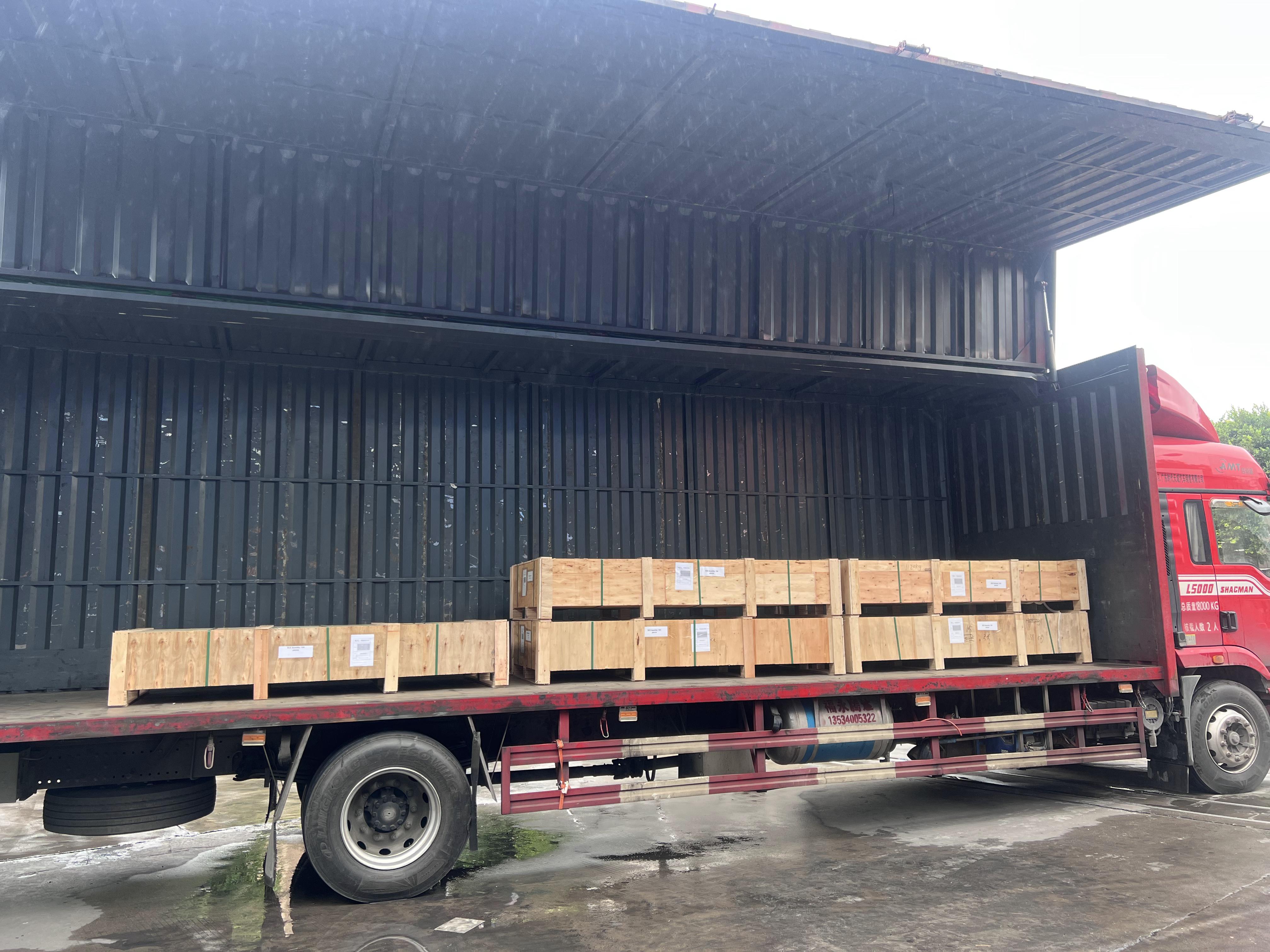
The requirements for domestic short-distance packaging and export long-distance packaging may differ. Outer cartons, liners, corner protectors, dividers, pallets, wrapping, labels, and moisture-proof treatment all affect costs. Insufficient packaging may lower the initial quotation but increases transport damage, replenishment, and customer complaints.
When requesting a quote, ask for the quantity per box, box specifications, weight, pallet method and loading reference. Trading companies should also confirm whether the customer needs neutral packaging, branded packaging, barcodes, shipping marks or multilingual labels. Packaging customization may involve minimum quantities and plate-making costs.
The sixth factor: quality confirmation and inspection scope
Different orders may have different acceptance standards for color, dimensions, appearance and packaging. Stricter sorting, inspection, records or third-party inspection increase costs but can reduce disputes at the destination. Trading companies should understand customer requirements before quoting, rather than raising standards temporarily after production is completed.
Quality costs should not be regarded as an add-on that can be completely eliminated. Stable retained samples, batch records and shipping inspections are an important foundation for long-term repeat purchases. Low-price orders without quality confirmation may generate higher total costs through customer complaints and replenishment.
From factory price to landed cost: the items foreign trade companies must calculate
The complete cost table is recommended to include at least the following content:
- Product procurement amount and customization fees;
- Packaging, pallet, labeling and reinforcement costs;
- Sample, courier and preliminary market testing costs;
- Inspection, domestic transportation, warehousing, and port miscellaneous charges;
- Costs related to sea freight, land transport, insurance and destination;
- Damage, shortages, replenishment and after-sales reserve;
- Sales commissions, exchange rate fluctuations, financing and payment term costs;
- Company operations, promotion and target profit.
Under different trade terms, the seller's scope of responsibility differs. Quotations must state the costs included and not included, to prevent customers from directly comparing unit prices under two different conditions.
How should the three types of orders be accounted for separately
Samples and trial orders
Trial order quantities are small, so unit handling and logistics costs are high. Its goal is to verify the market and the supply chain, so a separate test budget can be set; trial order costs should not be used directly to predict future bulk-order profits.
Standard replenishment orders
For standard orders, focus on optimizing stable specifications, packaging, loading and lead time. Determine key items based on actual sales volume to reduce extra costs from frequent specification changes and small batches.
Engineering project orders
In addition to products, project orders may also involve sample confirmation, phased delivery, documents, on-site coordination, and after-sales service. Quotations should take project duration and payment risk into account, and profit should not be reduced simply because the quantity is large.
How to explain price differences to customers
When customers ask "why is it more expensive," do not answer only that the quality is better. Use verifiable items to explain the differences, such as product number, specifications, surface effect, packaging, quantity, inspection, customization and delivery scope. Breaking down the quotation into a clear structure makes it easier for customers to understand and facilitates subsequent adjustments.
It is recommended that quotations include product photos or numbers, specifications, units, quantities, packaging, price terms, delivery time, validity period and remarks. For unconfirmed items, "to be confirmed" should be stated to avoid verbal information entering the contract and becoming unexecutable.
Five methods to improve profit
- Reduce ineffective styles:Focus on key textures based on customer selections to reduce sample and communication costs.
- Establish quantity tiers:Help customers understand the cost differences among trial orders, regular orders, and project orders.
- Optimize packaging and container loading:Reduce ineffective space and damage while protecting the product.
- Product portfolio for sale:Increase overall order value through basic models, specialty models, and project models.
- Reduce after-sales costs:Use numbering, retained samples, inspection and written standards to reduce disputes.
Common Questions
1. How much does flexible stone cost per square meter?
It must be confirmed according to the product series, specifications, quantity, packaging, customization, and delivery conditions; a fixed price divorced from these conditions has no procurement reference value.
2. Why do quotes from different manufacturers vary so much?
It may be that the product, specifications, quality range, packaging, quantity and service are different. Quotation conditions should be unified before comparison.
3. Does a larger quantity always mean a lower price?
Quantity usually has an impact, but once a stable production range is reached, the reduction may be limited; special customization and delivery requirements will still increase costs.
4. Should export packaging be priced separately?
It can be included or listed separately; the key is that the quotation clearly specifies the packaging structure, quantity, pallet and label scope.
5. Why is the unit cost higher for trial orders?
Because the costs of sampling, changing styles, packaging, handling, and logistics are spread over a smaller quantity. Trial orders are mainly for verification and should not directly represent mass-production costs.
6. How should exchange-rate and after-sales risks be reserved for?
Set reasonable allowances based on quotation validity period, payment cycle, historical exchange rate fluctuations, product loss, and replenishment costs, and clarify responsibilities in the contract.
7. How can you tell whether a quotation is profitable?
Deduct all procurement, logistics, service, capital, commission, operating and risk costs from the customer transaction price; do not deduct only the factory goods value.
Conclusion: first unify the conditions, then compare prices
The price of flexible stone is jointly determined by multiple factors such as product series, specifications, quantity, customization, packaging, quality, and delivery. Building materials foreign trade companies should use a unified inquiry form and a complete cost model to convert factory prices into executable landed costs and customer quotations.
To obtain an accurate quotation, provide FLAT with the product number, specifications, quantity, packaging, target market and customization requirements, and confirm the samples, quality and delivery time before placing a formal order.



 WhatsApp

 Guangdong Public Network Security Preparation No. 44200002005257
